
Advanced Implant Dentistry · Shepperton
Bone Augmentation in Shepperton
Not enough healthy bone to support dental implants? A bone graft rebuilds your jawbone, restores your natural jawline and creates a solid, sturdy foundation for implant-supported teeth.
What is bone augmentation?
Rebuilding the foundation for your implants
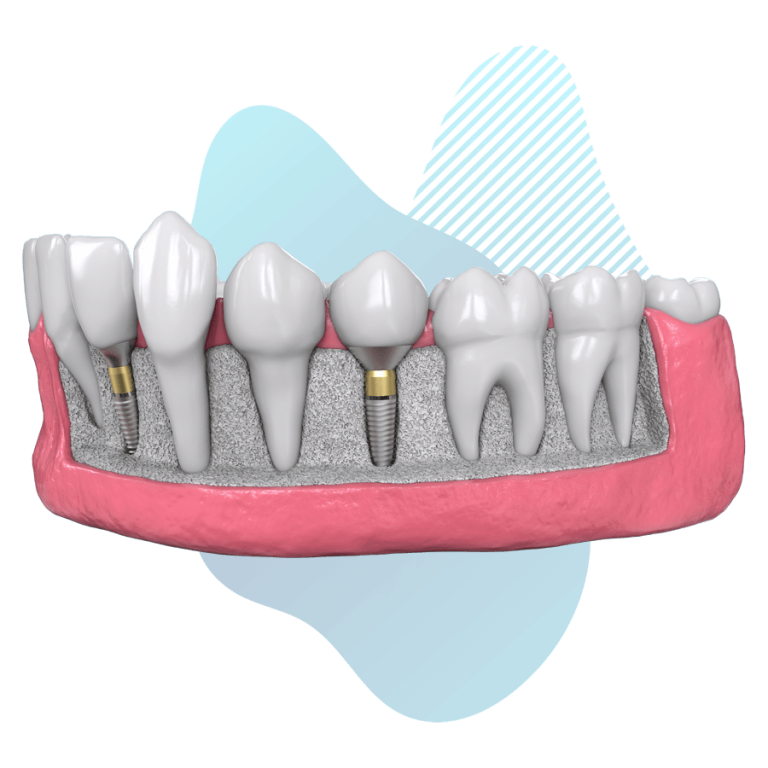
Bone augmentation is the process of rebuilding lost jawbone. It helps restore your natural jawline and smile and provides a solid foundation on which dental implants can be attached. Several techniques exist, but the most common is a dental bone graft.
Natural bone insufficiency can be caused by gum disease, tooth development defects, injury to the face after trauma, or the deterioration of empty spaces in your mouth after teeth are lost or removed. Whatever the cause, our team in Shepperton can plan a way to rebuild it.
Rebuilds lost bone
Restores jawbone height and width where teeth have long been missing.
Foundation for implants
Creates a solid, sturdy base to hold dental implants securely for years.
Preserves your jawline
Supports facial shape and stops the sunken look caused by bone loss.
Safe & highly successful
A routine, well-established procedure done in practice under local anaesthetic.
Why bone is lost
What causes a lack of healthy bone?
Before you have dental implants surgically placed, your dentist will examine your mouth to ensure it can support them. Most people are suitable — but some don't have enough healthy bone. That's usually addressed first with bone augmentation.
- Gum disease (periodontitis)
- Tooth development defects
- Long-term denture use
- Past injury or trauma to the face
- Tooth removal where the space was left untreated
- Previous dental procedures without bone preservation
What to expect
Your bone graft, step by step
A dental bone graft is a safe, highly successful procedure. A small amount of grafting material is placed at the site under local anaesthetic. As it heals, the new bone bonds with the old to make it stronger and better able to support an implant.
Assessment & 3D scan
We check bone volume with a CBCT scan and plan your treatment in detail.
Graft procedure
A small amount of grafting material is placed at the site under local anaesthetic.
Healing phase
The graft integrates with your natural bone — typically a few weeks to 2–3 months.
Implant placement
Once fully healed, implants can be placed on a strong, stable foundation.
Related procedures
Other bone augmentation procedures
Depending on your anatomy and goals, your dentist may recommend one of these alongside — or instead of — a standard bone graft.
Sinus lift
Increases bone in the upper jaw below the sinus so implants can be placed safely.
Ridge expansion
Widens a narrow jaw ridge so an implant can fit properly.
Alveolar ridge preservation
Placed at extraction to reduce bone loss and keep future options open.
Distraction osteogenesis
Encourages new bone to grow to lengthen a short section of jawbone.
What's next
Explore related implant treatments
Bone augmentation is often the first step towards a stable, long-lasting implant smile. Once your foundation is ready, here's where we go next.
Your questions, answered
Bone augmentation in Shepperton — FAQs
Take the first step
Book your bone augmentation consultation in Shepperton
A calm, thorough assessment with 3D scans and a clear written plan before anything is booked. Call 01932 227 349 or request an appointment online.
EMERGENCY?
Smile Again with Confidence
Whether you need a routine check-up, urgent care or a smile makeover — we're here to help. Call us today or request an appointment.
Our Credentials & Associations
Trusted, accredited and recognised